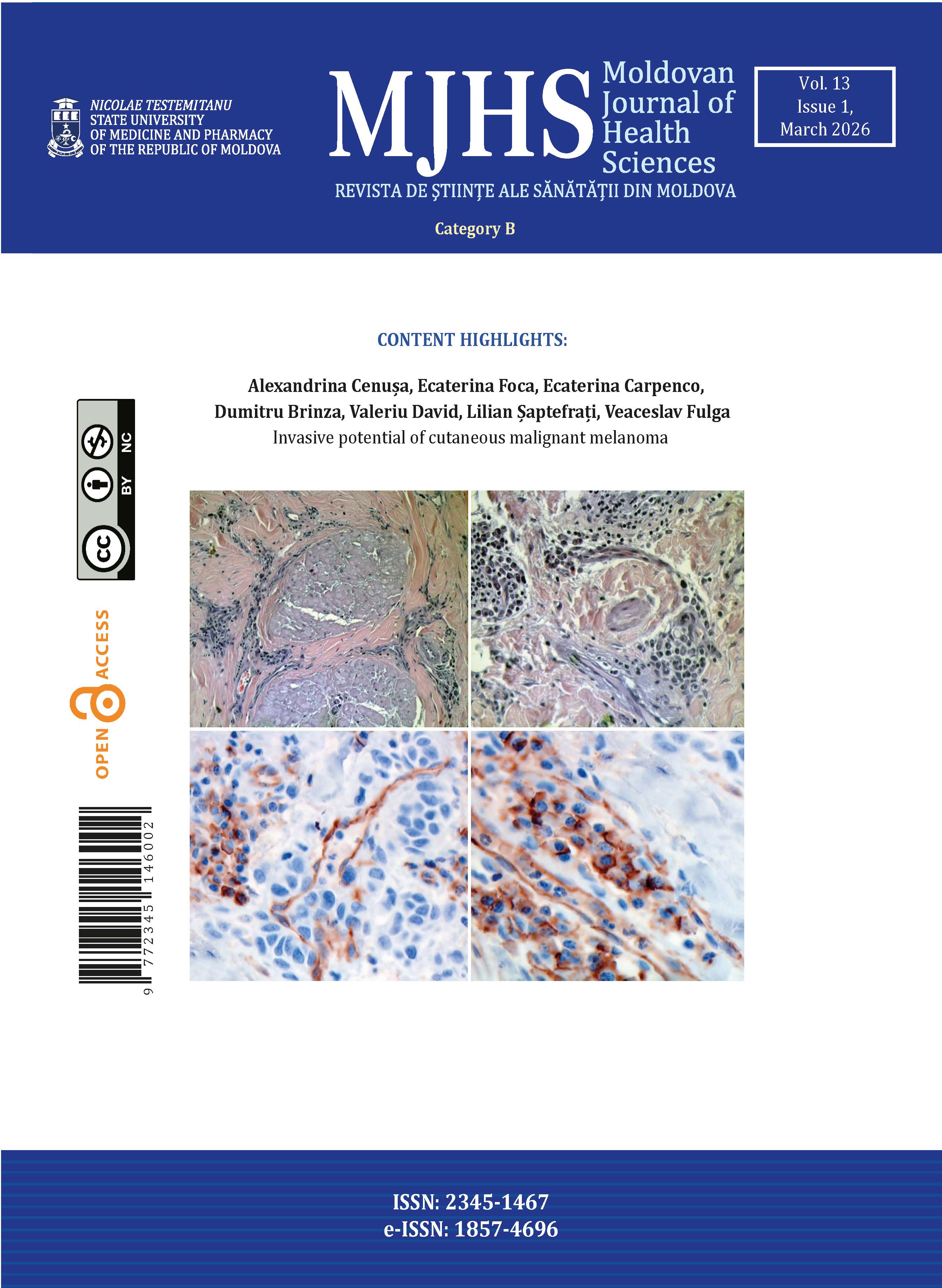
Cutaneous malignant melanoma is the most aggressive skin cancer, with a high mortality rate despite advances in therapy. This study aimed to evaluate the relationship between lymphovascular and perineural invasion and key clinicopathological parameters in superficial spreading melanoma, in order to assess their potential prognostic significance.
Current issue
Volum
13.
Issue
1
March, 2026
most recent article
Emergency care for trauma patients in the red zone: clinical experience from 2024
The traumatized patient with signs of shock remains a major cause of morbidity and mortality, requiring rapid diagnosis and multidisciplinary management. This study evaluates clinical, paraclinical, and therapeutic aspects of trauma patients admitted with shock signs in the red zone of the Emergency Department of the Institute of Emergency Medicine during 2024.
Articole recente
The gastrointestinal tract (GIT) is the most common site of extranodal primary non-Hodgkin lymphoma (NHL), accounting for 20% to 40% of all extranodal lymphomas. The advanced stages at diagnosis and complications remain significant issues in NHL management, imposing a substantial disease burden on patients and healthcare systems.
Micronutrient deficiencies during pregnancy remain a major global public health concern, with implications for maternal health, fetal development, and long-term child outcomes. International organizations such as the WHO and FIGO have issued evidence-based guidelines on micronutrient supplementation, which are increasingly being adapted into national protocols.
Venous thromboembolism is one of the leading causes of maternal morbidity and mortality. Pregnancy induces a hypercoagulable state as an adaptive mechanism to prevent hemorrhage during childbirth. These physiological changes significantly increase the risk of venous thromboembolism – by up to six-fold during pregnancy and up to 10-fold during the postpartum period compared to the non-pregnant population. Given these risks, proper identification of patients who may benefit from thromboprophylaxis is essential to improve maternal outcomes.
Dysphagia lusoria refers to dysphagia caused by an aberrant right subclavian artery (ARSA), a rare congenital anomaly of the aortic arch. This article presents a clinical case of symptomatic ARSA, accompanied by a comprehensive review of its anatomical, clinical, and therapeutic aspects.
Psoriasis is a chronic immune-mediated inflammatory condition and is considered a potential risk factor for the development of hematologic malignancies, particularly in the context of immunosuppressive therapy and T-cell dysfunction. B-cell non-Hodgkin lymphomas are neoplasms of the lymphatic system with variable clinical manifestations, most commonly presenting with peripheral lymphadenopathy. Primary localization in the soft tissues of the head, with bone invasion, is rare.
Recent issues
Indexed in